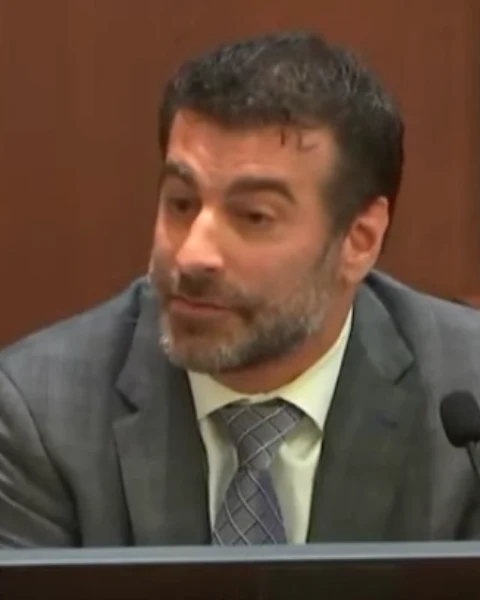
Julian Ackert
Julian Ackert is a computer forensics expert holding GIAC GCFE certification with 11–20 years of experience in the field. He was retained by Heard's legal team to rebut the forensic testimony of Depp's expert Bryan Neumeister. He was qualified by the court as an expert in computer forensics during the Fairfax County Circuit Court proceedings.
Testimony Impact
Ackert testified on direct that he located original iOS-metadata versions of all but one photo Neumeister had flagged as suspicious, presenting two demonstrative charts mapping each flagged item to its source device — iPhone X, iPad Pro, or laptops. He explained Apple's cross-device synchronization as the benign mechanism behind multiple copies appearing across Heard's devices, and characterized Neumeister's EXIF manipulation theory as entirely hypothetical, never anchored to a specific photo. On cross, Dennison narrowed Ackert's scope: Ackert acknowledged his authentication work covered only Neumeister-flagged photos, leaving the broader pool of Heard's evidence unaddressed. Dennison then confronted him with Plaintiff's Exhibit 1308 — two visually different photos sharing an identical filename and timestamp — a discrepancy Ackert could not resolve from the stand. On brief redirect, Ackert reaffirmed he had no forensic authenticity concerns about any of the Neumeister-flagged photos.
Notable Quotes From The Record
“Hashing is essentially a digital fingerprint of a file.”
Establishes the conceptual foundation for why the Photos-metadata photos and iOS-metadata photos would hash differently despite looking visually identical — underpinning Ackert's entire rebuttal.
“Apple wants you to be able to see and visually have the same experience on all your devices.”
Explains why original photos appeared across multiple Heard devices — Apple synchronization, not duplication for cover-up — defusing the evidentiary implication of multiple copies.
“That means the photo was not saved using the Photos application.”
Direct rebuttal point: iOS version in the software EXIF field indicates original capture, not Photos-app processing — negating Neumeister's concern.
“This is a completely hypothetical scenario. Mr. Neumeister never specified.any pictures with specificity that had EXIF metadata modification, and it's a hypothetical, in my opinion,”
Strongest credibility attack on Neumeister: characterizes his EXIF manipulation theory as unanchored speculation never tied to a specific photo.
“I have no opinions on any photographs that the opposing expert has no opinion on.”
Defines the outer bound of Ackert's authentication work — limited to what Neumeister challenged, leaving thousands of Heard's photos unaddressed.
“I'll agree that they show the use of the Photos application, which is a sorting and editing application.”
Ackert concedes the Photos app has editing capability, undermining a line of his direct testimony that framed EXIF references to Photos as benign.
“Have no testimony or opinion on those because nobody's provided the opinion that they're not.”
Ackert frames his silence on the broader photo set as a methodological boundary, but Dennison uses it to imply the authentication gap.
“Embedded metadata is metadata inside a file. I talked earlier about the date printed of a Word document. That's embedded into the file and that traverses with the file, whenever it goes.”
Ackert clarifies the mechanism underpinning his forensic analysis, establishing that metadata travels with files and is not externally imposed.
“I do not.”
Direct, unqualified denial of any forensic authenticity concerns for the Neumeister-flagged photos — the sole substantive conclusion of the redirect.
Key Moments
Ackert is qualified as an expert in computer forensics and walks through foundational methodology — defining hashing as a 'digital fingerprint of a file' and distinguishing embedded EXIF metadata from external metadata — establishing the conceptual basis for his entire rebuttal of Neumeister.
Day 23 · Direct of Julian Ackert
Ackert presents Defendant's Exhibit 1671, a chart he created mapping each Neumeister-flagged photo to its original counterpart on Heard's actual devices, each showing iOS software metadata rather than Photos app metadata — the core of his rebuttal case.
Day 23 · Direct of Julian Ackert
Ackert characterizes Neumeister's EXIF modification theory as 'a completely hypothetical scenario,' stating Neumeister never identified a specific photo with modified EXIF data — the sharpest credibility attack on Depp's forensic expert.
Day 23 · Direct of Julian Ackert
Ackert explains Apple's cross-device synchronization as the benign reason original photos appeared across Heard's iPhone X, iPad, and laptops — defusing the implication that multiple copies indicated a fabrication effort.
Day 23 · Direct of Julian Ackert
Dennison presses Ackert on scope: Ackert concedes he has no opinion on photos beyond those Neumeister specifically challenged, and cannot authenticate the broader pool of Heard's admitted photographic evidence.
Day 23 · Cross of Julian Ackert
Dennison publishes Plaintiff's Exhibit 1308 — two visually different photos with identical timestamps and filenames — and asks how the jury should determine which is real. Ackert defers to software metadata analysis he had not performed, leaving the discrepancy unresolved.
Day 23 · Cross of Julian Ackert
On redirect, Ackert flatly states he has no reason to question the forensic authenticity of any of the Neumeister-flagged photos, reaffirming his opinions were made with a reasonable degree of forensic certainty — the jury's last impression of his testimony.
Day 23 · Redirect of Julian Ackert
Evidence From Their Proceedings (5)
May 21, 2016 Face Photos — DX-710/712/713/714 + Metadata
Defendant's Exhibits 710, 712, 713, and 714, consisting of May 21, 2016 face photographs of Heard. Exhibits 712 and 713 appear visually different but share identical timestamps…
Catalog entry →Neumeister Demonstrative PX1303 — File Size Discrepancy
A demonstrative exhibit, designated PX1303, showing three versions of the same injury photograph with mismatched file sizes that would not hash or digitally fingerprint…
Catalog entry →Ackert Demonstrative — Evidence Provenance Chart (Def. 1675)
A summary chart, designated Defendant's Exhibit 1675, listing IDS evidence numbers, source types distinguishing physical devices from iTunes or iCloud backups, and device details…
Catalog entry →Ackert Demonstrative — Neumeister Items Mapping Chart (Def. 1671)
A chart, designated Defendant's Exhibit 1671, mapping each item in Neumeister's report to the corresponding original photograph found on Heard's devices, with columns for date…
Catalog entry →Neumeister-Flagged Photos — Ackert Redirect Rebuttal
Photographs previously flagged by Bryan Neumeister for EXIF metadata concerns, revisited during Ackert's redirect examination. Ackert reaffirmed that he found no forensic…
Catalog entry →