Person Richard Shaw Depp v. Heard← All People
Expert Witness

Richard Shaw

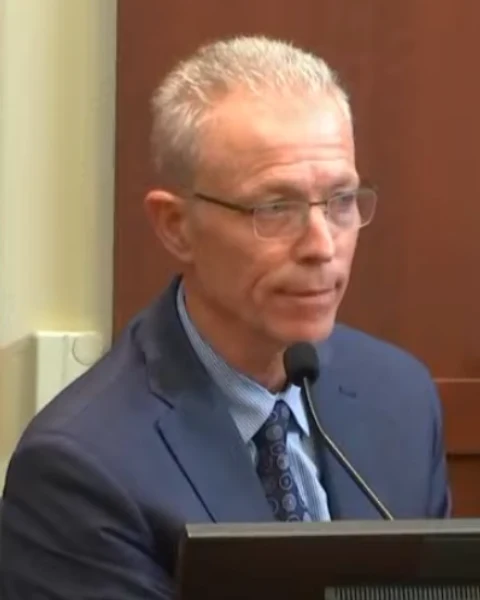
Richard Shaw is a professor of psychiatry at Stanford University with approximately 35 years of clinical practice. He completed medical school at the University of London, residency at Albert Einstein College of Medicine, and a fellowship at Stanford. He was retained by Depp's legal team as a rebuttal expert to Dr. David Spiegel, Heard's psychiatric expert witness.

Testimony Impact

Shaw testified that Heard's psychiatric expert Dr. Spiegel violated the APA Goldwater Rule by rendering professional opinions about Depp's personality and cognition without examining him, obtaining his consent, or gathering sufficient data. He traced the Rule's origins to the 1964 presidential campaign β€” when roughly 1,000 psychiatrists publicly diagnosed Barry Goldwater β€” and its 2017 APA expansion, identifying two core violations: diagnosing narcissistic personality traits and assessing cognitive deficits from a deposition video and a mini-mental status exam. Multiple sidebars constrained his permitted scope to ethical violations only. On cross, Nadelhaft neutralized Shaw's critique by establishing that Spiegel had twice requested to examine Depp β€” requests Depp himself declined β€” and that the court had authorized Spiegel's testimony. Shaw's redirect added no substantive content, leaving the Goldwater Rule concessions from cross essentially uncontested on re-examination.

Notable Quotes From The Record

“about 2,000 psychiatrists responded, a thousand of whom expressed very negative opinions about Senator Goldwater, and made comments such as, for example, he was a megalomaniac, he was a paranoid schizophrenic, that he had narcissistic personality disorder.”

Shaw's account of the 1964 Fact magazine survey that prompted the Goldwater Rule β€” contextualizing why the APA viewed remote psychiatric diagnosis as a serious professional and legal hazard.

“the main premise of the Goldwater Rule is that it was improper for a psychiatrist to render professional opinion about a public figure unless they had personally and closely evaluated them.”

Shaw's concise statement of the Goldwater Rule's core prohibition β€” the doctrinal standard against which Spiegel's conduct was measured throughout this proceeding.

“my opinion is that he did not. He expressed a number of professional opinions about Mr. Depp that we heard about yesterday. And, again, he did so without an evaluation, without consent.”

Shaw's direct conclusion that Spiegel violated the Goldwater Rule, identifying the two most fundamental deficiencies: no examination and no consent.

“the actual presence of risks factors for IPV that Dr. Spiegel was talking about, they say absolutely nothing about what happened in this case.”

Shaw's closing argument against Spiegel's IPV testimony: even a full constellation of risk factors cannot establish that any individual perpetrated abuse, directly attacking the probative value of Spiegel's opinions for the jury.

“I'm aware of that.”

Shaw's concession that Depp declined Spiegel's requests, undercutting his own ethical critique.

“I heard that yesterday in testimony, yes.”

Shaw's sole substantive response on redirect β€” a brief affirmation of having heard testimony from the prior day; the triggering question is absent from the transcript.

Key Moments

Shaw explained the Goldwater Rule's origins in the 1964 presidential race, when roughly 2,000 psychiatrists were surveyed and about 1,000 publicly diagnosed Barry Goldwater β€” contextualizing why the APA viewed remote psychiatric diagnosis as a serious professional hazard and the basis for the Rule's creation.

Day 21 Β· Direct of Richard Shaw

Sidebar on admission scope: Nadelhaft agreed not to object to Shaw's qualification as an expert only on the condition that his testimony remain limited to the Goldwater Rule and related ethical violations β€” a constraint the court enforced through repeated subsequent objections.

Day 21 Β· Direct of Richard Shaw

Shaw delivered his central opinion: Spiegel violated the Goldwater Rule by expressing professional opinions about Depp's personality and cognition without examining him, without his consent, and without sufficient data β€” the two most fundamental requirements of the Rule.

Day 21 Β· Direct of Richard Shaw

Shaw closed his direct by distinguishing correlation from causation in Spiegel's IPV risk-factor testimony, arguing that even a full constellation of risk factors says nothing about what actually occurred in any specific case β€” directly attacking the probative value of Spiegel's opinions for the jury.

Day 21 Β· Direct of Richard Shaw

Nadelhaft established through a series of leading questions that Shaw had never before offered an opinion, written an article, given a presentation, or served on a committee related to the Goldwater Rule β€” effectively framing him as a first-time authority on the very doctrine underpinning his testimony.

Day 21 Β· Cross of Richard Shaw

Shaw conceded that Dr. Spiegel had twice requested to meet with and examine Depp, and that Depp declined both times β€” flipping Shaw's ethical critique by attributing the lack of examination to Depp's own choice rather than any breach by Spiegel.

Day 21 Β· Cross of Richard Shaw

Nadelhaft closed the cross by having Shaw acknowledge that the court itself had authorized Dr. Spiegel to testify β€” the final rebuttal to the Goldwater Rule violation claim, leaving Shaw having endorsed both the voluntariness of Depp's refusal and the judicial imprimatur on Spiegel's role.

Day 21 Β· Cross of Richard Shaw

Redirect was nearly empty: Calnan posed a single question β€” unrecorded in the transcript β€” to which Shaw confirmed he had heard the referenced testimony the prior day, then immediately passed with nothing further, leaving the cross-examination record uncontested.

Day 21 Β· Redirect of Richard Shaw

Evidence From Their Proceedings (6)

Appearances (3)