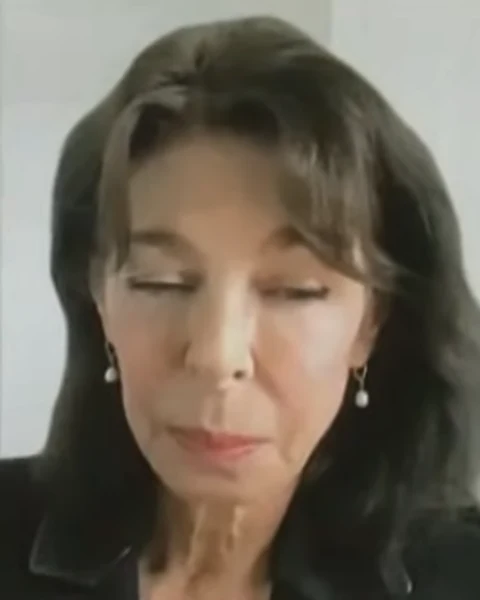
Laurel Anderson
Clinical psychologist and solo practitioner since approximately 1986, holding a Ph.D. (1982) and multiple master's degrees. Served as the couples therapist for Johnny Depp and Amber Heard during 2015–2016, conducting sessions under pseudonyms — Ann Henry for Heard and Joey Davis for Depp — at the parties' request. Had no prior relationship with either party before the referral through Christian Carino.
Testimony Impact
Anderson testified that she characterized the Depp–Heard relationship as mutual abuse, describing Heard as the more verbally dominant partner who repeatedly cut Depp off and left him unable to "have a voice" in sessions. She relayed Heard's own solo-session admissions: that Heard initiated physical fights out of pride rooted in her father's abuse history, and that she struck Depp specifically to prevent him from leaving during deescalation attempts. Anderson's authenticated therapy notes further showed Heard asking in December 2015 whether filing a police report before leaving Depp would give her a legal advantage — which Anderson characterized as strategic calculation rather than a cry for help. On the Australia finger injury, Anderson testified Depp never mentioned it to her before June 18, 2016, grounding her timeline in her contemporaneous note-taking practice.
Notable Quotes From The Record
“Ms. Heard had a jackhammer style of talking. She was very amped up. He had trouble talking at a similar pace. Their dialogue, he was cut off a lot.”
Anderson's clinical characterization of the communication dynamic in sessions, establishing why Depp struggled to participate and felt overwhelmed.
“they engaged in what I saw as mutual abuse”
Anderson's direct characterization of the relationship as bidirectional, a central framing for Depp's team.
“It was a point of pride to her, if she felt disrespected, to initiate a fight.”
Heard's own self-reported motivation for initiating physical confrontations, as relayed by her treating therapist.
“she would strike him to keep him there. She would rather be in a fight than have him leave.”
Anderson relays Heard's self-reported tactic of striking Depp to prevent deescalation, tying the behavior to abandonment fear.
“she hits back and now she starts it and sometimes hits him first because her history is having been violated by her father physically”
Anderson recounts Heard's own explanation, given in an individual session, for why she initiates physical violence against Depp — framing it as pride and trauma response rather than self-defense.
“she slapped him because he was being incoherent and talking about another -- being with another woman”
Anderson confirms Heard admitted to initiating the December 2015 slap — not in response to being struck — while Depp was incapacitated following his mother's hospitalization.
“She loved him. He loved her. She believed that - she wasn't stupid. She knew that what they were doing wasn't healthy, and so she wanted to want to divorce him, but she didn't.”
Anderson characterizes Heard's emotional state in late 2015: aware the relationship was destructive but unwilling to leave, lending context to the strategic calculations that follow in the same session.
“This was her talking out loud, trying to strategize for herself.”
Anderson identifies the police-report-advantage notation as Heard's own strategic thinking, not a clinical recommendation — directly relevant to the defense's characterization of Heard's motivations.
“That's what I recall. They may have been in other places throughout her body; I don't remember. But I do remember her face.”
Anderson affirms her recollection of bruising specifically on Heard's face, anchoring her earlier testimony.
“What I said previously, and I'll say it again: He's kind of doing a retrospective of trying to understand the relationship and is characterizing it as chaotic and violent, that she gave as good as she got and she started it.”
Anderson contextualizes Depp's own words from therapy as a retrospective self-assessment, not a contemporaneous account.
“she.initiated fights. She started violence. She rose to the challenge if he started first, which I - and so she - in my opinion, that had been established throughout the relationship, that she fought as hard as he did, and he tried to deescalate far more than I think she did”
Anderson's clearest articulation of her mutual-abuse assessment, directly tying Heard's conduct to the 'gave as good as she got' characterization.
“No. Because I would have written it when he first mentioned it to me.”
Anderson explains her confidence that the finger injury was not discussed before June 18, 2016, grounding the timeline in her note-taking practice.
“That's true.”
Concedes the one-sided nature of the disclosures in those solo sessions.
Key Moments
Anderson introduces the mutual-abuse framing — describing both parties as having childhood abuse histories, characterizing the relationship as bidirectional, and noting Depp was 'well-controlled for decades' before being triggered by Heard.
Day 3 · Direct of Laurel Anderson
Anderson describes Heard's 'jackhammer style of talking' that left Depp repeatedly cut off and overwhelmed during couples sessions, establishing why he struggled to participate.
Day 3 · Direct of Laurel Anderson
Anderson relays Heard's self-reported tactic of striking Depp to keep him present: 'She would rather be in a fight than have him leave' — tying the violence to abandonment fear.
Day 3 · Direct of Laurel Anderson
Chew walks Anderson through Heard's October 6 solo intake notes: Heard admitted she 'hits back and now she starts it and sometimes hits him first' because of her history of being violated by her father.
Day 3 · Cross of Laurel Anderson
Anderson reads her December 15, 2015 phone notes recording Heard's disclosure that she slapped Depp while he was intoxicated and talking about another woman — an initiation Heard herself reported.
Day 3 · Cross of Laurel Anderson
Anderson characterizes Heard's question about filing a police report first as 'talking out loud, trying to strategize for herself' — framing it as legal calculation, not a distress response.
Day 3 · Cross of Laurel Anderson
Anderson testifies that Depp never mentioned his finger injury before June 18, 2016, anchoring the absence in her note-taking practice: 'I would have written it when he first mentioned it to me.'
Day 3 · Redirect of Laurel Anderson
Chew's single-question recross locks in that Depp was not present during Heard's solo-session disclosures of his violent behavior — establishing the one-sided evidentiary basis for those specific accounts.
Day 3 · Recross of Laurel Anderson
Locations
Evidence From Their Proceedings (9)
Anderson Couples Therapy Session Notes (Plaintiff's Ex. 2)
Seventeen-page redacted session notes (Bates 1–17) prepared contemporaneously by couples therapist Laurel Anderson during sessions with Depp and Heard, color-coded and…
Catalog entry →December 2015 Heard Injury Photos — Anderson Recollection
Photographs of Heard's facial bruising, including bruising around the eyes, shown to couples therapist Laurel Anderson by Heard around the time of the December 15, 2015 incident.…
Catalog entry →Anderson Billing Ledger — Session Pseudonyms
Laurel Anderson's billing ledger tracking therapy sessions under the pseudonyms Ann Henry (Heard) and Joey Davis (Depp).
Catalog entry →Anderson Treatment Summary (Plaintiff's Ex. 6)
Treatment summary that Laurel Anderson prepared when first subpoenaed, synthesizing her clinical notes and conceptual impressions of the Depp–Heard relationship.
Catalog entry →Anderson–Carino–Heard Email Chain (March & September 2015)
Email chain among therapist Laurel Anderson, Christian Carino, and Amber Heard arranging the initial and subsequent couples therapy consultations in March and September 2015.
Catalog entry →Carino March 2016 House Call Request to Anderson
Carino's March 2016 request for a house call from Dr. Anderson, along with Anderson's reply noting she wanted Depp to understand something she believed he did not.
Catalog entry →Carino–Anderson Initial Contact Document (Plaintiff's Ex. 1)
Document showing Christian Carino's initial contact with therapist Laurel Anderson and Heard's message requesting how to reach her.
Catalog entry →Document re Heard's Separate Therapist (Plaintiff's Ex. 3)
Document, previously marked as Anderson Exhibit 6, relating to Heard's reference during couples therapy to her own separate therapist.
Catalog entry →Pharmacokinetic document regarding neurotransmitter function, genetics, and medi
Pharmacokinetic document regarding neurotransmitter function, genetics, and medications shown to Anderson by Heard
Catalog entry →