Person Penney Azcarate Depp v. Heard← All People
Judge · Fairfax County Circuit Court

Penney Azcarate

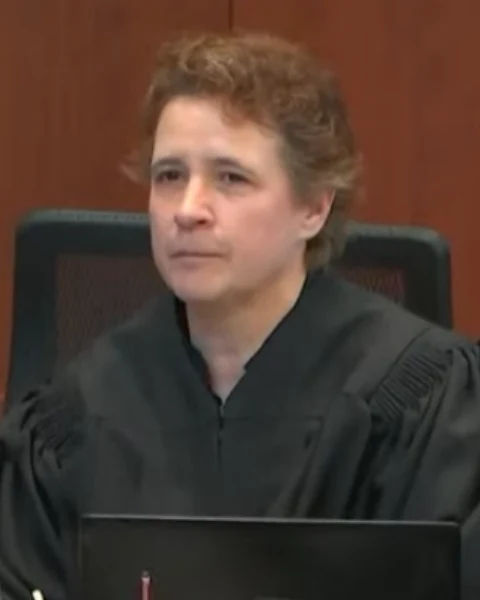
Penney S. Azcarate is the Chief Judge of the Fairfax County Circuit Court in Virginia's Nineteenth Judicial Circuit, the first woman to hold that position. Elected to the bench in 2012 and elevated to chief judge in 2021, she previously served on the Fairfax General District Court. A former Marine Corps Reserve officer, she practiced law in Northern Virginia before her judicial career.

Judicial Impact

Judge Azcarate presided over the six-week trial at a brisk tempo, prioritizing on-time starts and tight evidentiary control over courtroom theatrics. She ruled from the bench on hundreds of objections, cabining cumulative testimony and narrowing expert scope while permitting live cameras at her own discretion. Her sidebar rulings on Heard's photo metadata, the Tasya van Ree prior-violence impeachment, and the Day 13 motion to strike materially shaped the case Heard could put on. During deliberations she narrowed Question 43 to the op-ed headline alone in response to the jury's clarification request. She then read the split verdict awarding Depp $10.35M and Heard $2M, applying Virginia's statutory cap to reduce Depp's punitive award from $5M to $350K.

Notable Quotes From The Record

“This tainted my jury. There's going to be repercussions.”

Judge signals displeasure with Heard's weekend social media post and foreshadows possible sanctions if jurors saw it.

“I'm going to reserve the issue.”

Court defers ruling on Chew's sanctions motion rather than instructing the jury mid-selection.

“The name of this case is John C. Depp I versus Amber Heard.”

Formal case introduction to the venire.

“I do have an opinion about something.”

Basis for striking Juror 7 for pretrial-publicity bias.

“I've been abused domestically.”

Disclosure leading to Juror 26's removal after he said he could not be unbiased.

“Since they can't have the context, I'm not going to allow them in, so I'm deny-- I'm going the sustain the objection to 163.”

The court's ruling excluding Exhibit 163, citing the jury's inability to understand the texts without surrounding context.

“just the only part that comes in is as far as Ms. Heard's text is the "JD is on a bender," and I don't even know the last part of it -- that's it.”

Defines the narrow slice of Exhibit 210 admitted — limiting Heard's texts to a single impeachment phrase about Depp's alleged substance use.

“I will instruct the jury they'll have to strike the testimony of Ms. Deuters. There's a rule on witnesses, Mr. Moniz.”

Judge's immediate ruling on the witness sequestration violation, delivered on the record before the sidebar.

“From now, on the front row, it's only legal team, okay? No family on front row for either side. I said only legal team in the front row. There's plenty of seats in the courtroom.”

Court's new standing rule on front-row access, prompted by the Eve Barlow incident.

“Ladies and gentlemen, the Court is striking Ms. Gina Deuters' testimony, in its entirety, from the record; therefore, the Court further instructs you, the jury, to disregard her testimony in its entirety.”

Formal jury instruction striking Deuters' testimony — the operative procedural consequence delivered to the fact-finders.

“No. Then it can't come in. Just because they didn't object to it doesn't mean it automatically comes in at trial.”

The court's ruling on Exhibit 245 blocks Heard's team from using Depp's own words about substance use to contextualize the Boston flight through this witness.

“It's hearsay. Mr. Judge is, obviously, deceased, so we can't lay a foundation.”

The court's stated basis for excluding the cleanup-period audio recordings; Jerry Judge's death foreclosed any foundation for his statements on the recordings, shutting out potentially significant contemporaneous evidence.

“Since you're subject to recall, Dr. Curry, please, do not discuss your testimony with anybody and, please, do not watch anything about this trial, okay?”

Standard recall instruction to expert witness, establishing Curry's continued role in the proceedings.

“I understand. But I have to sustain your objection at this time.”

Court rules against admitting the photos through Saenz, while implicitly acknowledging they will likely be admitted through another witness.

“He can't say that. That's a factual issue, okay?”

The court's definitive ruling that direct causation — why Depp lost Pirates 6 — is reserved for the jury, not expert opinion.

“But he just can't say that was the reason he lost Pirates.”

The judge restates the ruling's bottom line before dismissing the sidebar, setting the scope boundary for Marks's testimony.

“The weight of that evidence is up to the fact-finders, so the motion to strike is denied as to statement 2 and 3.”

Formal ruling allowing two of three defamation claims to proceed to the jury.

“I'm just not going to allow arrests in. I think it's too prejudicial because it lists an arrest, not conviction, so I'm not letting any arrests come in.”

The judge's definitive ruling on the scope of admissible prior-conduct evidence, drawing the line at arrests versus proven conduct.

“I can't -- I can't require her to use the originals that you based on. Just because you're doing this all by depositions, it's just a very strange case. But it's their case, I allow the de-designations, okay?”

The court's ruling permitting Heard's team to continue de-designating deposition testimony, framing it as counsel's right to manage their own case presentation.

“Actually, you keep saying metadata. This actually isn't metadata. This is just from an iPhone, which I can go in and I can change my listings for these on my iPhone, and it will show up as a different date and different location. Metadata is something that is extracted from the phone and is with the file, and it would show that I had changed the location. That's metadata, so ...”

Judge draws a technical distinction between changeable iPhone display fields and true extracted metadata, framing the foundational issue for her ruling.

“when they send judges to computer forensic school down in Alabama, these things happen.”

Judge references her forensics training as the basis for her technical position on what constitutes metadata.

“There will be sanctions if it happens again.”

Formal warning placing counsel on notice that further violations will carry consequences.

“One of the kids posted it on TikTok, I found out this morning. It's been removed from TikTok and nobody can go on that balcony again for the duration of this trial.”

Judge discloses a second, independent social media exposure incident and announces her corrective action.

“I have to go by designation.”

The court's bottom-line rationale for limiting Bercovici to rebuttal: the designation document is controlling, regardless of subsequent supplementation arguments.

“Definition of rebuttal expert is that they rebut an expert from the other side, correct?”

Judge Azcarate signals she is applying the standard legal definition of rebuttal expert and invites counsel to confirm — forecasting her ruling.

“It still says rebuttal expert, okay.”

Final statement closing the sidebar argument — the judge's ruling in three words.

“The voir dire is just for his qualifications as an expert.”

The court's ruling narrows the permitted scope of voir dire, preventing Dennison from using it as an early vehicle to attack Schnell's methodology or conclusions.

“That doesn't have to do with his qualification, whether he's qualified as an expert or not.”

The judge draws a clear line between the purpose of voir dire and the damages-scope dispute Dennison was pursuing.

“That's not what voir dire is for, though.”

Direct statement of the procedural rule limiting voir dire to expert qualification, not substantive damages inquiry.

“Then I'll move him in as an expert in the statistical and forensic analysis of social media.”

Formal admission establishing the expert's recognized field for the jury.

“Over objection, he's entered as an expert as stated on the record. All right. You may continue.”

Court's ruling admitting Spiegel over Depp's team's partial objection, allowing Heard's IPV expert testimony to proceed.

“It is not my role to measure the veracity or weight of the evidence. The force record in the Virginia Supreme Court have made it crystal clear that actual malice is a question for the fact-finder; so therefore, the plaintiff's motion to strike is denied.”

Definitive ruling preserving Heard's counterclaims and sending the actual malice question to the jury.

“all of a sudden, I heard Kate -- I thought of Kate Moss on the stairs. That gave a negative connotation, and even to me, I'm like, Oh, does that mean that something happened with Kate Moss on the stairs?”

Judge explains on the record why Heard's staircase testimony created an inference entitling Depp to call Kate Moss as a rebuttal witness.

“the only thing they can talk about is the pin -- they did the surgery, pin, and soft cast. That's all I should hear.”

The court's definitive scope limitation on Kulber's testimony, drawing a hard line against any opinion on causation.

“She was an expert witness. How would she not have anything to rebut? So no. The answer's no.”

Court summarily rejects the defense bid to block Dr. Curry's rebuttal, preserving Depp's ability to counter Dr. Hughes's forensic psychology testimony.

“That's what rebuttal witnesses are.”

The court dismisses the defense's prejudice argument by noting that surprise is the inherent nature of rebuttal witnesses.

“the probative value outweighs the prejudice”

The court's stated legal basis for admitting Night's testimony over the defense's late-disclosure objection.

“Allright. Thank you, sir. You can either have a seat or you can leave. Thank you. Your next witness.”

Formal dismissal of Shaw, closing his testimony and transitioning to the next witness.

“You just scared me with the size of that.”

Judge's aside on the length of the Bercovici written brief, after Nadelhaft offered to submit it rather than read it aloud.

“by the end of the day tomorrow, if I could get clean jury instructions without the cites on them, for the ones that have been admitted”

Court's directive to both sides to produce finalized jury instructions, signaling the case is approaching closing arguments.

“I don't find that it's a collateral matter in this matter because Ms. Heard testified that she always does self-defense, she only hits in self-defense”

The judge's rationale for admitting Leonard: Heard's own pattern-of-self-defense testimony made a prior non-self-defense assault directly relevant, not collateral.

“I'm going to limit it just to the stairs, okay?”

The operative ruling on Kate Moss's scope — her testimony confined to whether Depp harmed her on the stairs, mirroring the precise doorway Heard opened.

“An expert in rebuttal can only rebut experts.”

The controlling principle applied to exclude both Collins and Neumeister, as Heard's defense presented no expert witnesses for either to rebut.

“Reversible error is what I'm trying to avoid in this case.”

Repeated rationale for the court's strict adherence to expert designation rules throughout this sidebar.

“All the case law I've ever read says you can't use an expert to rebut lay witness testimony.”

The court's core holding on rebuttal expert limitations, applied to exclude both Collins and (pending case law) Neumeister.

“That's what rebuttal experts are. In Virginia.”

Direct statement of Virginia's rule limiting rebuttal experts to rebutting opposing expert testimony only.

“it's going to be extremely limited, as far as only photographs that are in evidence that he can opine on”

Defines the narrow scope of Neumeister's permitted rebuttal testimony.

“The central issues in this case are whether defendant defamed plaintiff and whether plaintiff defamed defendant through a theory of vicarious liability.”

Court's framing of case scope used to reject TMZ's intervention as non-germane.

“Whether that breaches a nondisclosure agreement between Mr. Tremaine and EHM is not germane to this matter and can be litigated in a separate matter, if EHM so chooses.”

Core rationale for denying intervention: NDA and privilege disputes are outside the defamation trial's subject matter.

“Motion to strike is denied for the reasons previously given by the Court.”

Ruling preserving Depp's defamation claims and sending them to the jury.

“You're going to limit it just to whatever evidence from your rebuttal case.”

The judge's core ruling limiting Vasquez's cross to rebuttal-case topics only.

“It opens quite a bit, Mr. Rottenborn.”

Judge signals that Heard's testimony referencing Internet reaction and this trial opened the door to broader cross on damages.

“anything that's tied to damages, we're not going to go back to 2009. Anything that's tied to damages.”

Judge articulates the operative standard: cross topics must relate to Heard's counterclaim damages; pre-rebuttal history is off the table.

“The only way they find defamatory statements in this case is if there's actual malice, and that's unique to this case; I understand that. But so if they find actual malice, defamatory statements, you don't have protected speech privilege.”

The judge's reasoning for denying the self-defense privilege instructions as moot — actual malice and the privilege are mutually exclusive on these facts.

“Merely linking to an article does not amount to republication, but adding content to a linked article may constitute republication. You must determine whether any added content was intended to reach a new audience. If you find it was intended to reach a new audience, it constitutes a republication.”

The final jury instruction language on republication — directly relevant to whether Heard's Twitter activity extended liability for the op-ed.

“Our system of law does not permit jurors to be governed by sympathy, prejudice, or public opinion.”

Core impartiality instruction delivered directly to jurors before closing arguments, framing the standard for deliberation.

“The term "actual malice" should not be confused with the more common meaning of the word "malice," such as "ill will" or "hatred."”

Critical definitional instruction separating the legal standard from its colloquial meaning — central to both parties' claims.

“Merely linking to an article does not amount to republication, but adding content to a linked article may constitute republication.”

Governs whether Heard's December 19, 2018 tweet constitutes actionable republication of the op-ed — a distinct basis for liability.

“Mr. Depp cannot recover damages for any harm that occurred after November 2nd, 2020.”

Establishes the damages cutoff date for Depp's claims, limiting the scope of compensable harm the jury could award.

“your verdict must be unanimous”

The threshold requirement for the jury's decision — all twelve seated jurors must agree.

“It is rarely helpful for jurors, upon first entering the jury room, to take a straw vote or for any juror to make an emphatic expression of his or her opinion in the case, or to announce a determination to stand for a certain verdict.”

Caution against anchoring bias and premature position-locking before full deliberation.

“none of you should surrender your honest conviction as to the weight, or-effect of the evidence solely because of the opinion of your fellow jurors, or for the mere purpose of returning a verdict.”

Protection of individual juror conscience against social pressure toward a verdict.

“You'll have two sets of verdict forms, one for Mr. Depp's case and one for Ms. Heard's case”

Confirms the jury must evaluate Depp's defamation claims and Heard's counterclaim independently.

“it's clear that the title is the statement”

Judge's threshold determination that narrows the falsity question to the headline alone, not the full op-ed.

“The statement is the headline not the entire op-ed.”

The exact written clarification sent back to the deliberating jury.

“since the jury has the case now and it's out of my hands, I appreciate your motion but I'm not going to entertain it at this time, okay?”

Judge explains her policy of not acting on motions once deliberations have begun.

“Regardless of the verdict, I will not tolerate any outburst, whatsoever, okay?”

Judge's admonishment to the gallery before the verdict is read, underscoring the formal stakes of the proceeding.

“As against John C. Depp, II: We, the jury, award compensatory damages in the amount of $2 million.”

The damages verdict on Heard's successful counterclaim over Waldman's 'hoax' statement.

“I will amend the punitive damages award to the statutory cap of $350,000 on Mr. Depp's award, okay?”

Judge immediately applies Virginia's statutory punitive cap, reducing the $5M jury award to $350K.

Key Moments

Appearances (2)